

The Alhambra Palace – wheelchair accessibility in Spain’s Moorish masterpiece
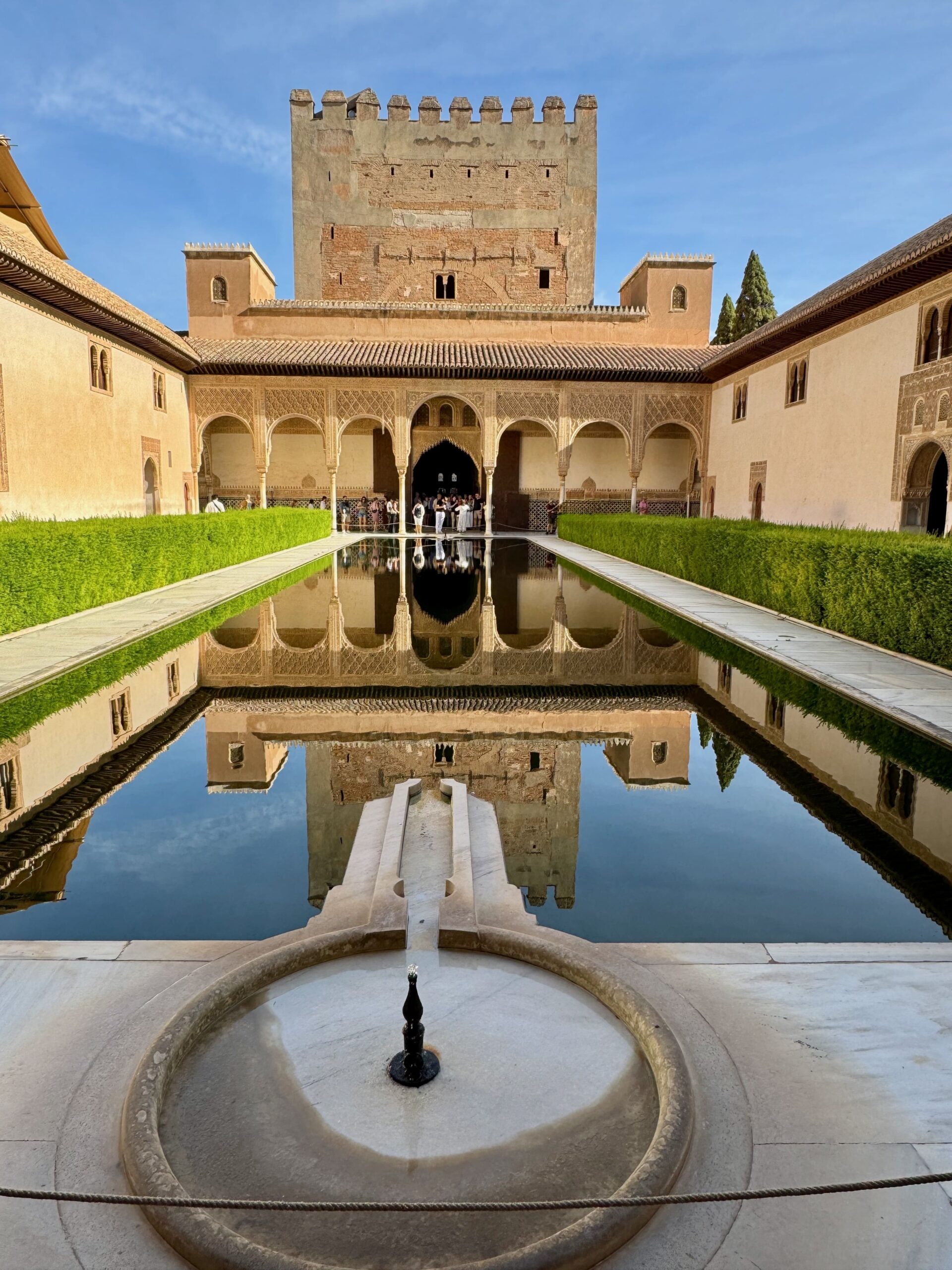
The Alhambra Palace. Quite possibly one of the most spectacularly beautiful places I have ever seen.
It wasn’t necessarily the easiest of places to visit. Not known for planning a long time in advance, we nearly missed our opportunity.
Booking a very last-minute trip to Andalucía in southern Spain, the focus was more on finding somewhere accessible to stay. Options were limited at such late notice and in fact our apartment, described by a well-known booking agency as entirely wheelchair accessible, proved generous in its description.
So, booking tickets for what many call the eighth unofficial wonder of the world almost slipped my mind. A slightly stressful evening the night before eventually resulted in three tickets and an early start the next day, venturing across town to make the ascent to the palace. For it sits at the top of a very large hill.
I will not pretend that it was an easy climb. In fact, we made it about two thirds of the way to the top before I gave up and put Stan in a taxi to meet Molly and I at the other end. For power chair users the ascent should pose no problems as it is fairly even, just steep. It was cobbled in parts, but this didn’t cause Molly any undue problems.
For manual users however, you would need good lungs and even better biceps. While Stan’s are pretty impressive (mine slightly less so!) it was still a bit much. For the route to the top takes you along a hilly route, characterised by its winding narrow streets. It is certainly challenging, however, for those for whom this wouldn’t be an option there is a bus that runs from the centre of town to the top. The bus is wheelchair accessible with ramps to get on, however there is only space for one wheelchair, hence our work out.
But if there is ever going to be a reward for a challenge, the Alhambra repays it in spades.
Bypassing the slightly pushy lady at the entrance who tried to sell us a guided tour for one hundred euros, we instead made a beeline for the shop where we picked up a guidebook for around ten euros. The Alhambra does not offer any information onsite and we were quite surprised to find out that there were no audio guides. But the guidebook served us well, enabling us to find out more as we went round and really gain an understanding of the significance of the palace.
However, even with no prior knowledge at all, it would be impossible not to be completely blown away by the sheer beauty surrounding you on all sides.
Commanding incredible views over the surrounding countryside, the Alhambra feels like a love letter. To history, to culture and to exquisite craftsmanship.
A very, very brief history of the Alhambra Palace
A settlement was initially built here in the ninth century. By the thirteenth century this had developed into a complete palatine complex. It was a whole town in itself, housing everyone from peasants to nobles, along with the military. Over the years this developed, with the construction of the palaces mostly occurring during the fourteenth century. The Nasrids were the last Muslim dynasty to rule in Spain and this period was responsible for the construction of the palaces, a series of buildings connected by courtyards which showcase some of the glorious craftsmanship and features of Islamic architecture.
The whole complex was declared a UNESCO site in 2007.
Entry to the Alhambra – a few words of advice
There are a variety of ticket options to visit the Alhambra. However, if you want to visit the Nasrid palaces, undoubtedly the highlight of the trip, you must purchase a timed entry ticket which gives a concrete time slot. Allow plenty of time as the palaces lie a good twenty minutes from the main entrance. And the queues are large. We arrived an hour in advance of our booking. By the time we had made it through the entrance, navigated over enthusiastic tour guides and made a quick pit stop, we arrived with moments to spare.
Fortunately, we did not have to wait in line. Staff ushered us straight to the front of a much smaller queue. A word of warning – bring ID. The same staff turned away the woman in front of us. She had her ticket but no ID. Similarly, do not be late as you will not get in. Full stop.
The Nasrid Palaces
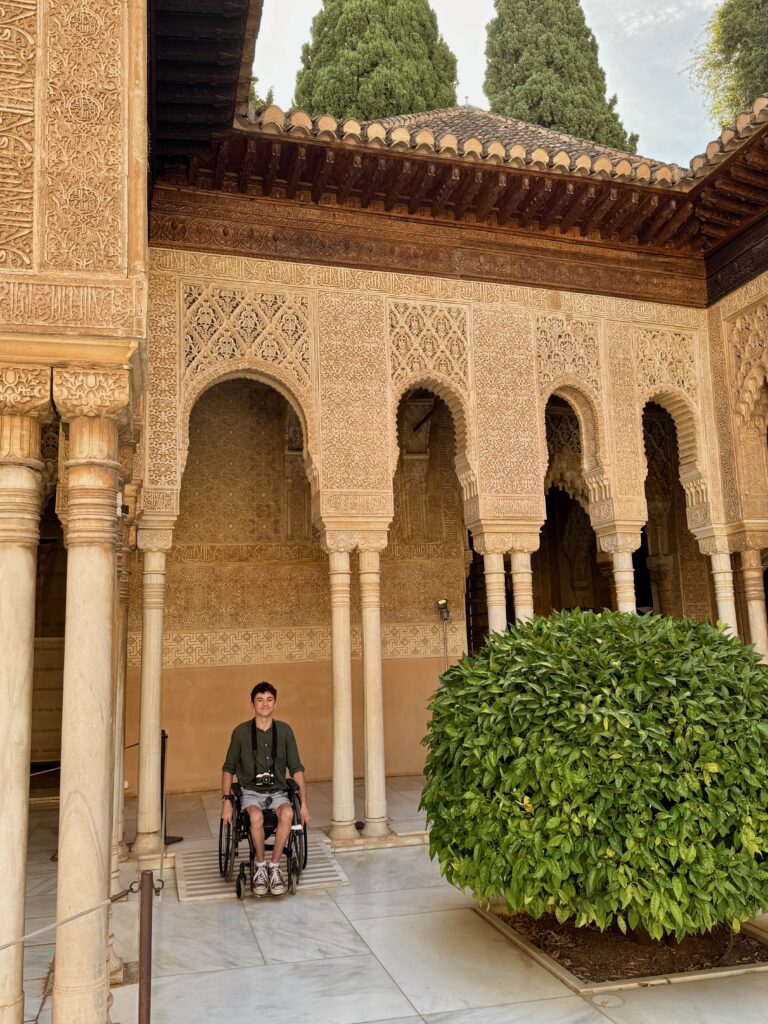
A ramp down to the palaces, where the first to visit was the Comares Palace. Entering, we were instantly faced with the beautiful Patio de los Arraynes (Court of the Myrtles in English), named for the eponymous bushes that line the edge of the rectangular pool. The courtyard is one of the most iconic images of the Alhambra and rightly so. It is utterly stunning, often described as a masterpiece of Islamic architecture. Every feature has purpose. From the rooms flowing off on all sides, to the mirror like pool perfectly reflecting the beautiful architecture surrounding it. Despite there being many people, the space felt tranquil.
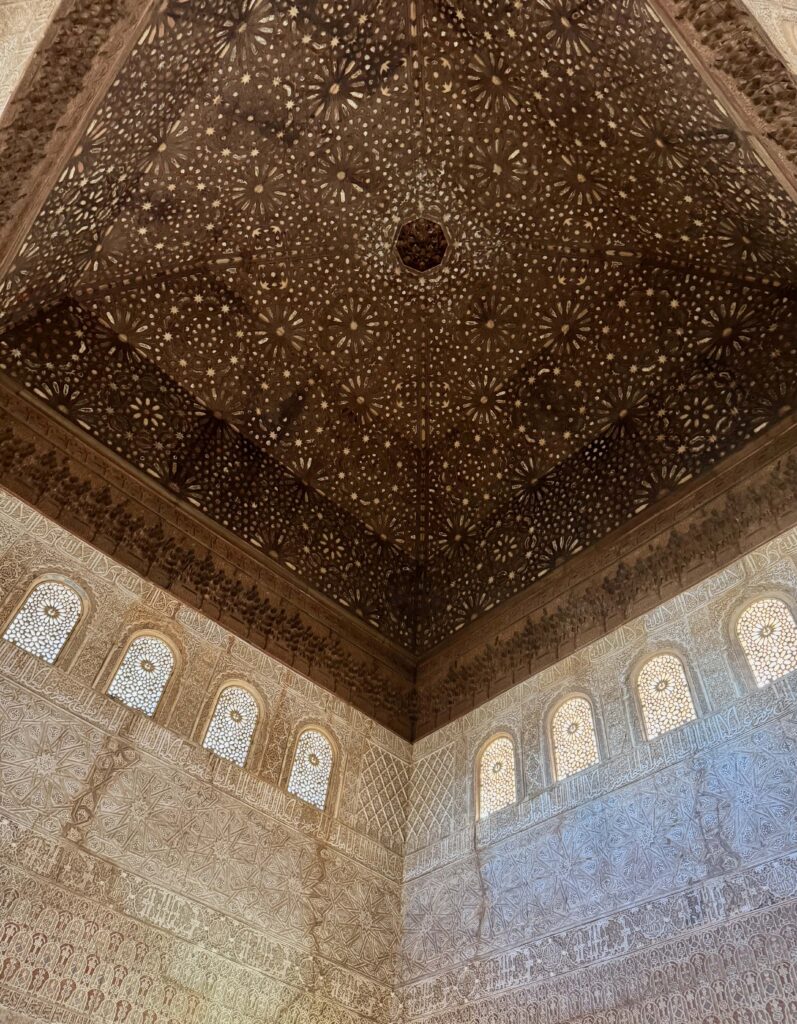
The rooms opening off this displayed exquisite plaster work embellishing walls, along with colourful tiles. Then, moving on to the Chamber of Ambassadors, the most spectacular ceiling. A massive wooden dome carved out of thousands of coloured wooden pieces. Characterised by seven crowns of concentric stars. Each represents one of the seven heavens every soul must pass through before reaching Islamic Paradise. The plasterwork on the walls depicts script, poetry and excerpts from the Qur’an along, with a few words of more practical advice.
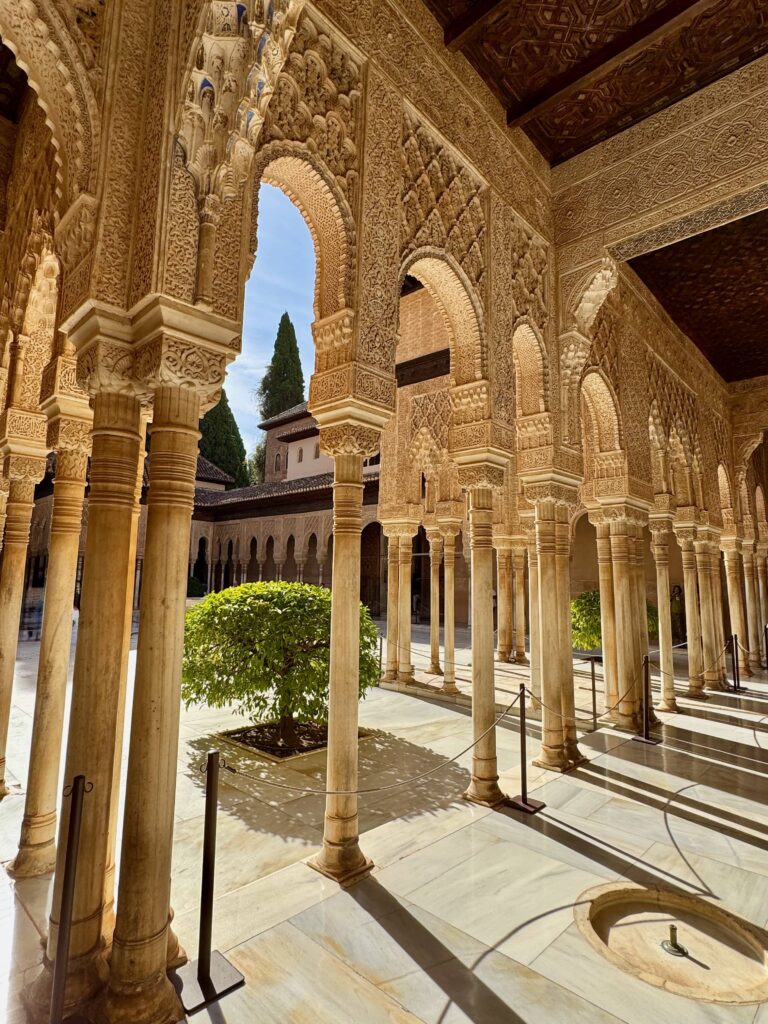
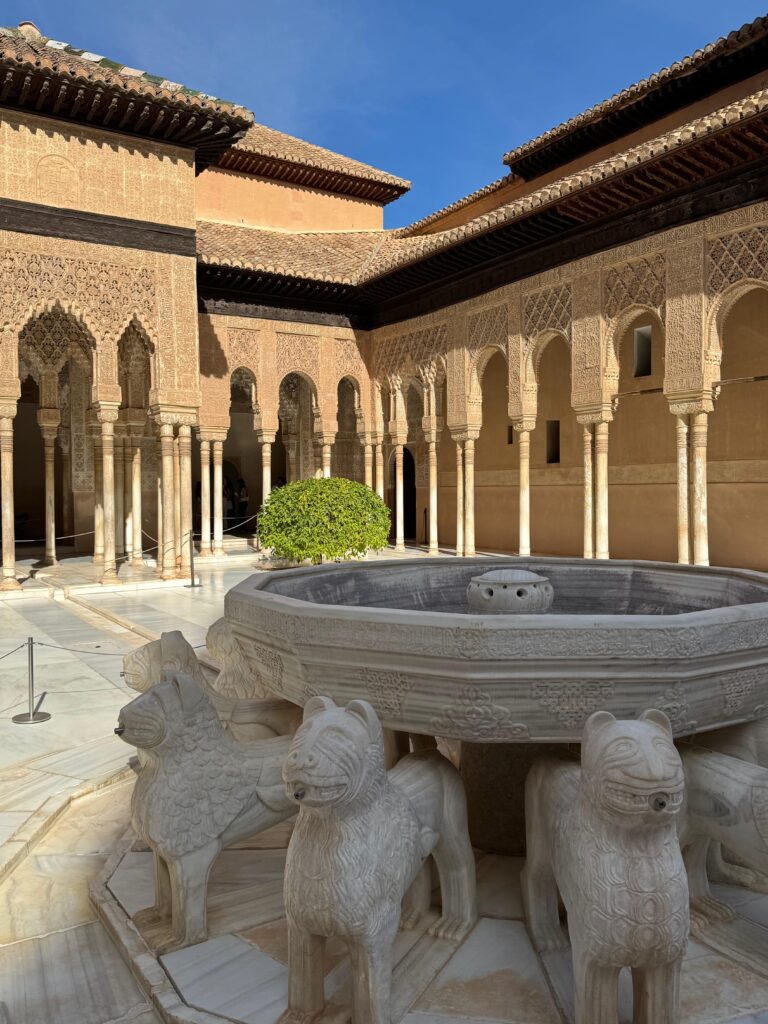
Personally, I particularly loved the columned portico surrounding the Court of the Lions. Again this was exquisitely beautiful but with an air of mystery, where I could imagine all kinds of liaisons taking place.
We were unable to see all of the palaces due to access issues. But with smooth tiled floors and small ramps to facilitate entry, the parts that we could see were easy to navigate. However, with no written information available, we did have to rely quite heavily on our guidebook to get a sense of those areas that were off limits.
The Alcazabar
The same applied to the Alcazabar. The oldest part of the city, it masterminded all military operations. Stationed here were all officers and soldiers. Unfortunately, a flight of steps blocked access. We were informed that this area was not accessible to wheelchair users.
Charles V Palace
It was shame but, in all honesty, there was so much to see that it was not a disaster. Instead, we enjoyed a well-earned cold drink in front of the Charles V Palace. The aforenamed king built this huge Renaissance palace in the heart of the complex. It symbolised the victory of the Spanish empire over the last Muslim rulers.
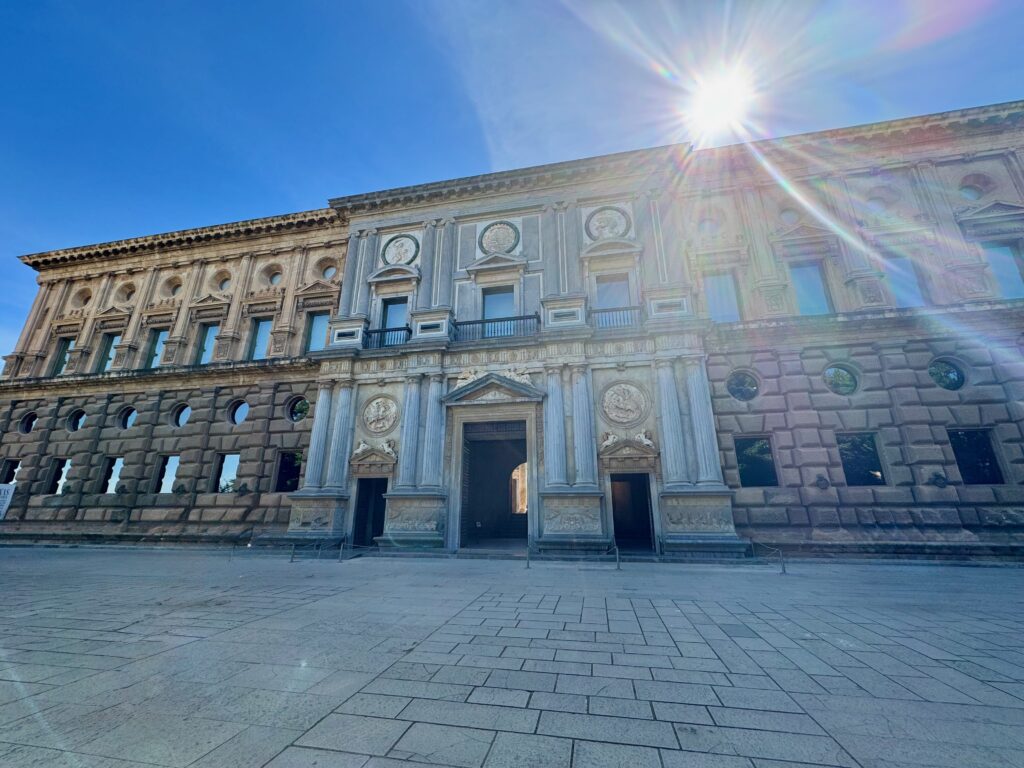
I t was built on a much grander scale than the earlier palaces. The main courtyard is circular, set within a square and flanked by 32 columns. It is huge, with overtones of Imperial Rome, reflecting the emperor’s interests. The palace ran into many difficulties during its construction, mostly related to financing. As a result that it did not have a roof until 1929.
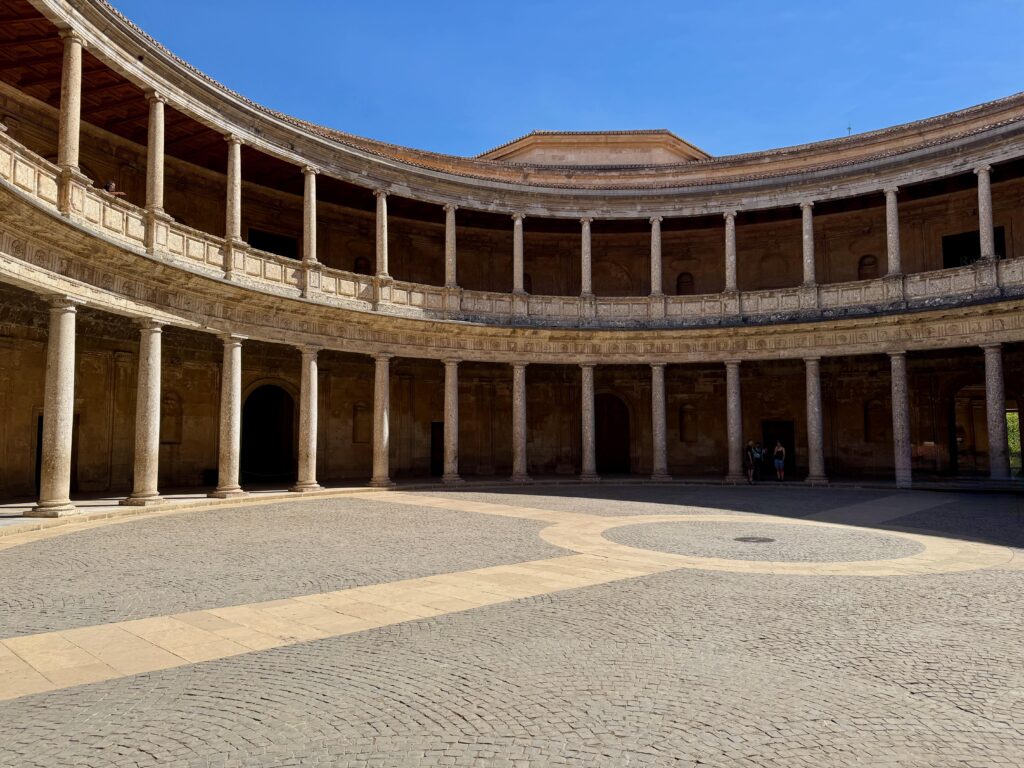
It was easy to get into the palace with ramped access by the main door – however a small step around the periphery made it difficult to get out into the centre of the courtyard. Similarly the courtyard is on two levels – while a lift is available to get to the top floor, once there, there is a small step to actually get outside and see the view from above. For those who do want to try, access is through he museum – ask a member of staff who will be more than happy to assist and once upstairs there is step free access to the extensive art collection of the museum.
Towards the Generalife
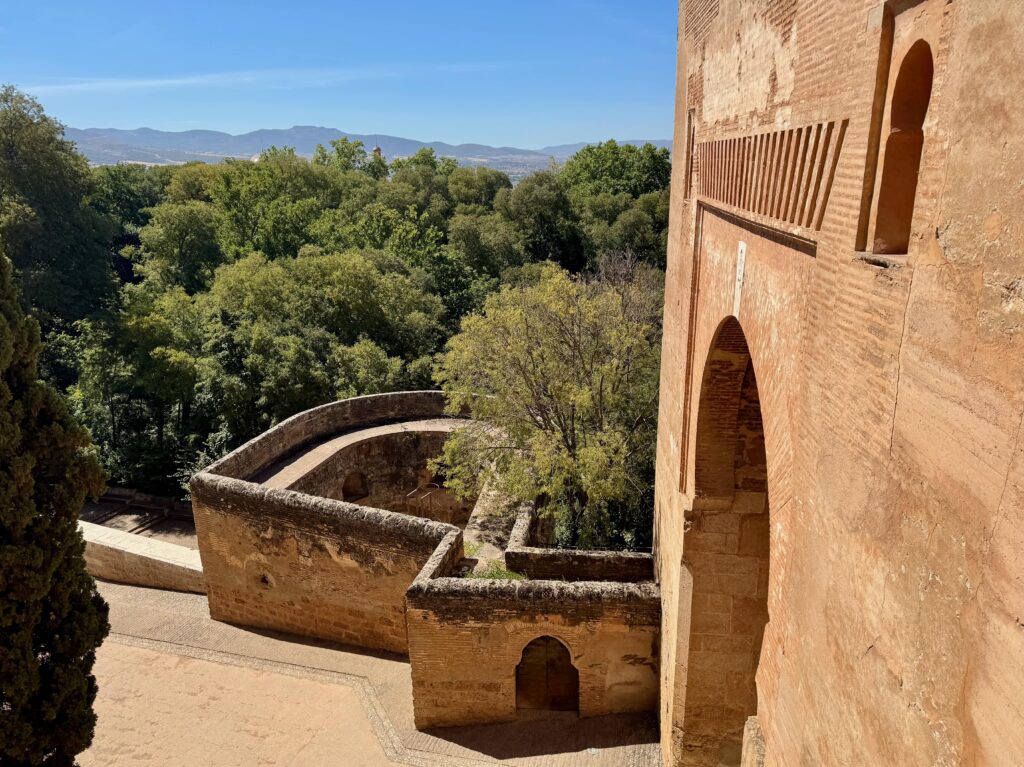
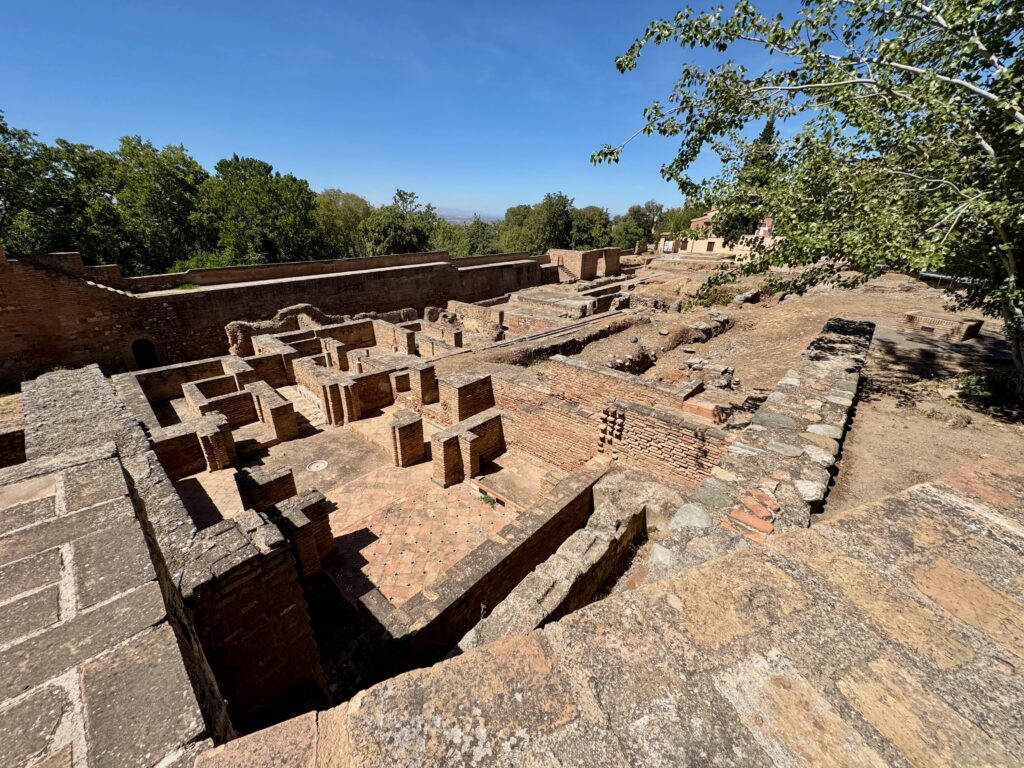
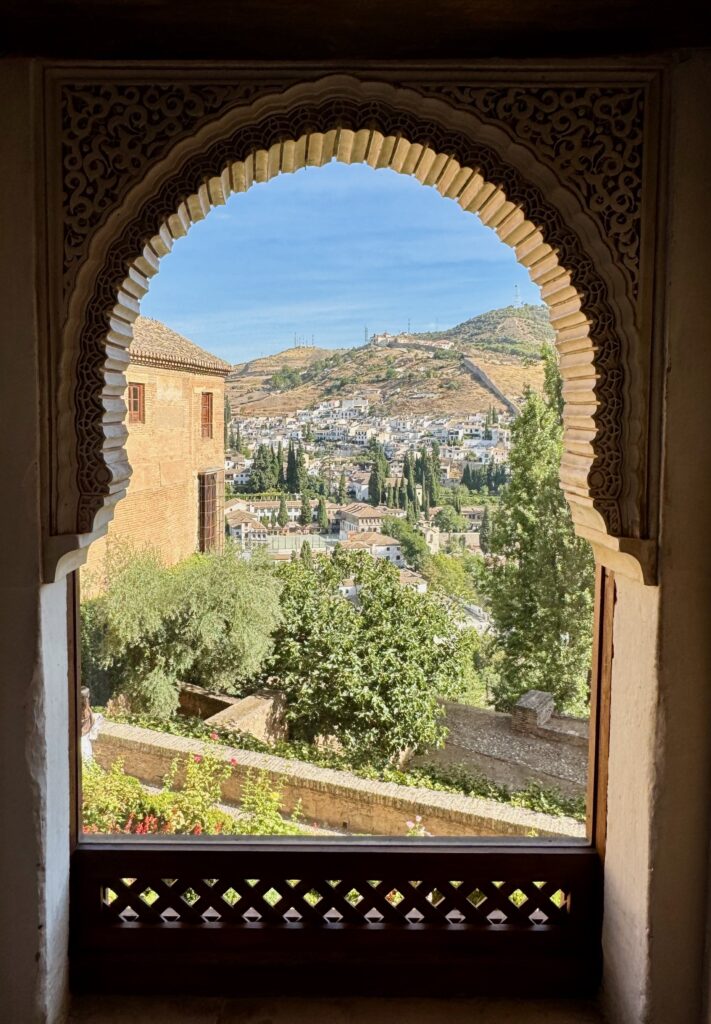
From there, it was an utter luxury to explore the gardens of the complex. We worked our way up toward the Generalife. Housing another palace, outside of the city walls and used purely for relaxation and leisure by the Nasrid sultans. The views were glorious in all directions. All points afforded breath-taking vistas out over the surrounding countryside.
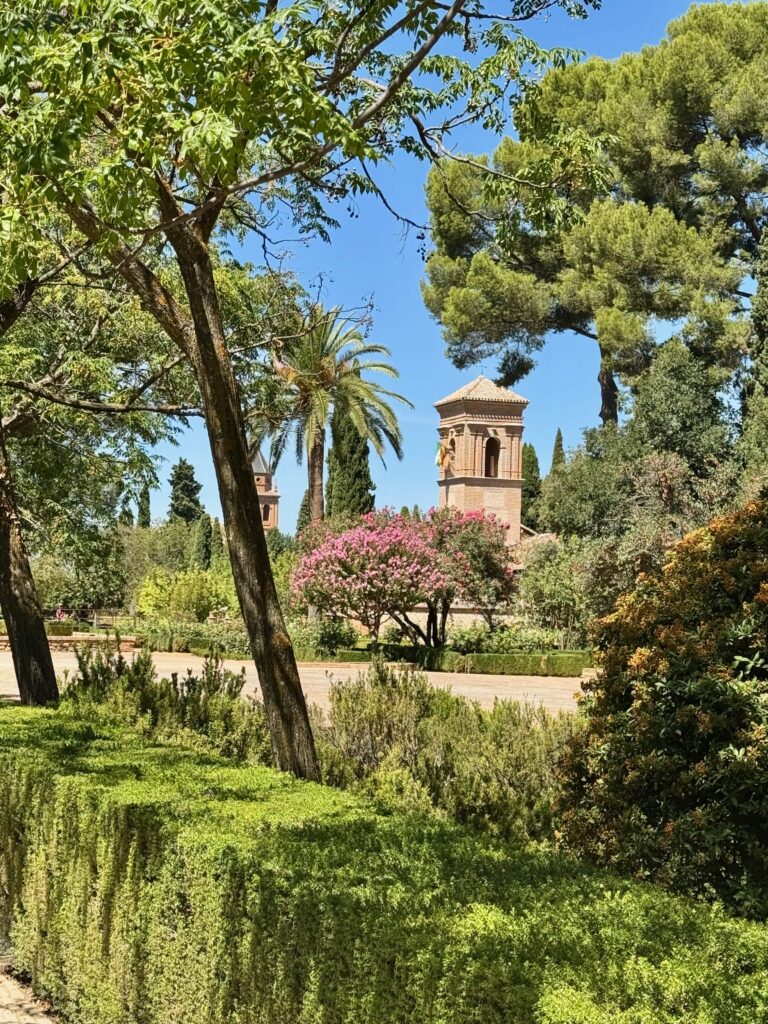
We stopped for a moment in the grounds of beautiful medieval building. Once part of the palatine court then a convent, now a beautiful heritage hotel in the heart of the Alhambra.
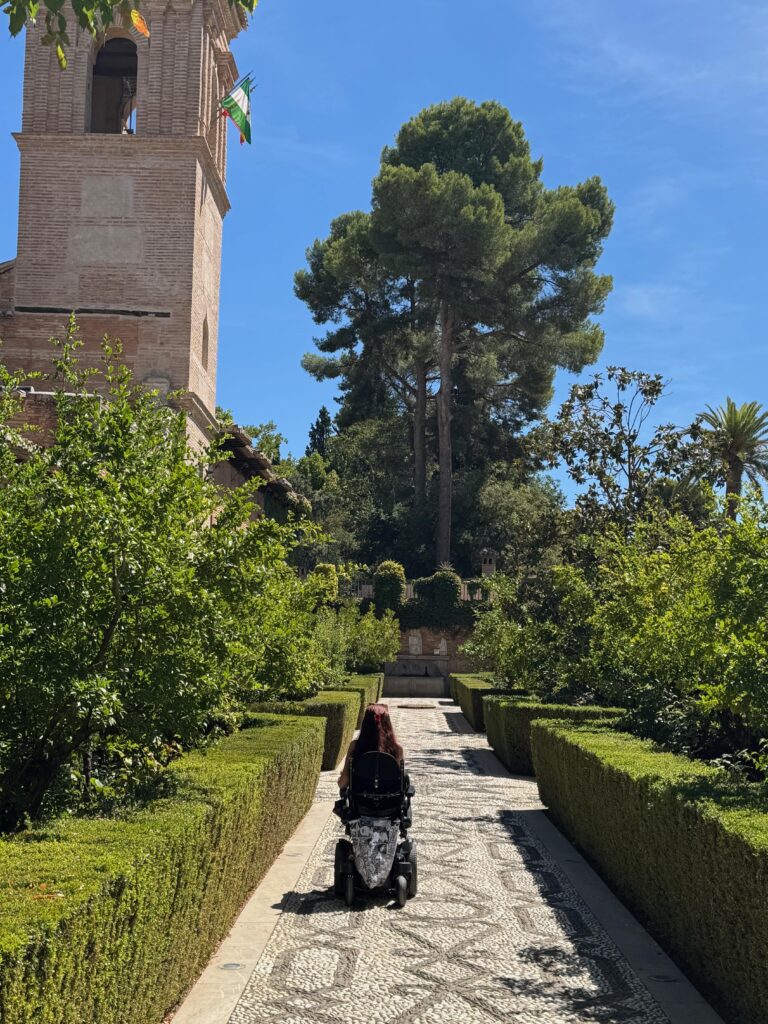
We wandered up the main street of the old Medina. We imagined it bustling with city folk going about their day-to-day business. Once there would have been shops, public baths and residential dwellings, now only a whisper of that remains.
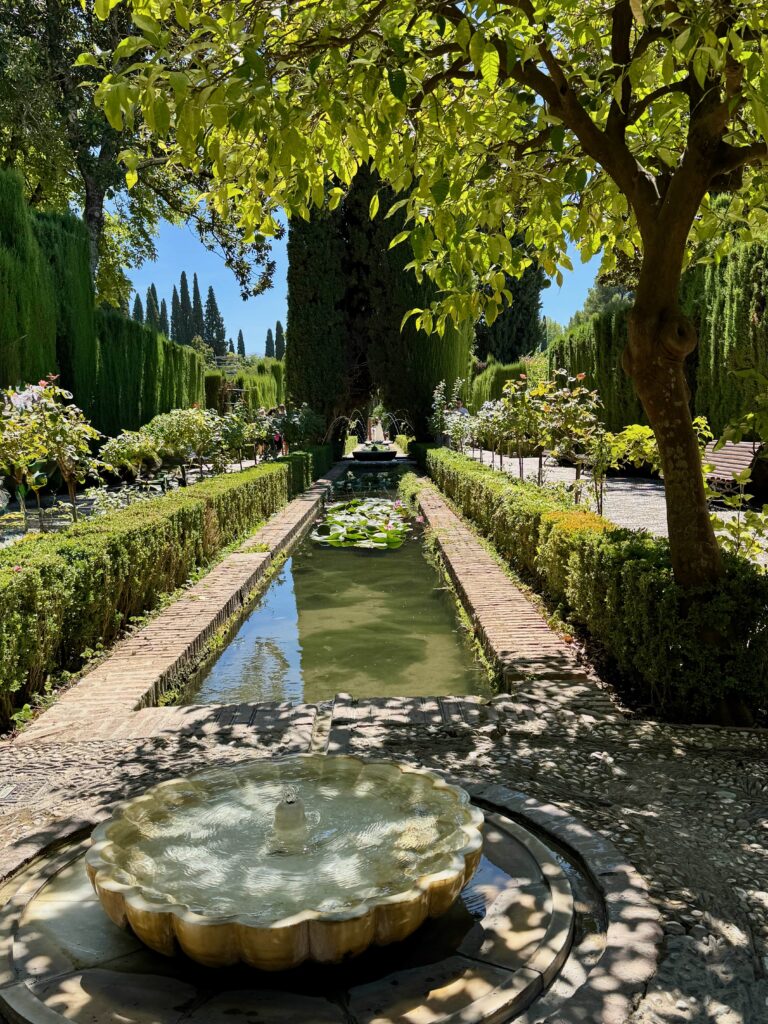
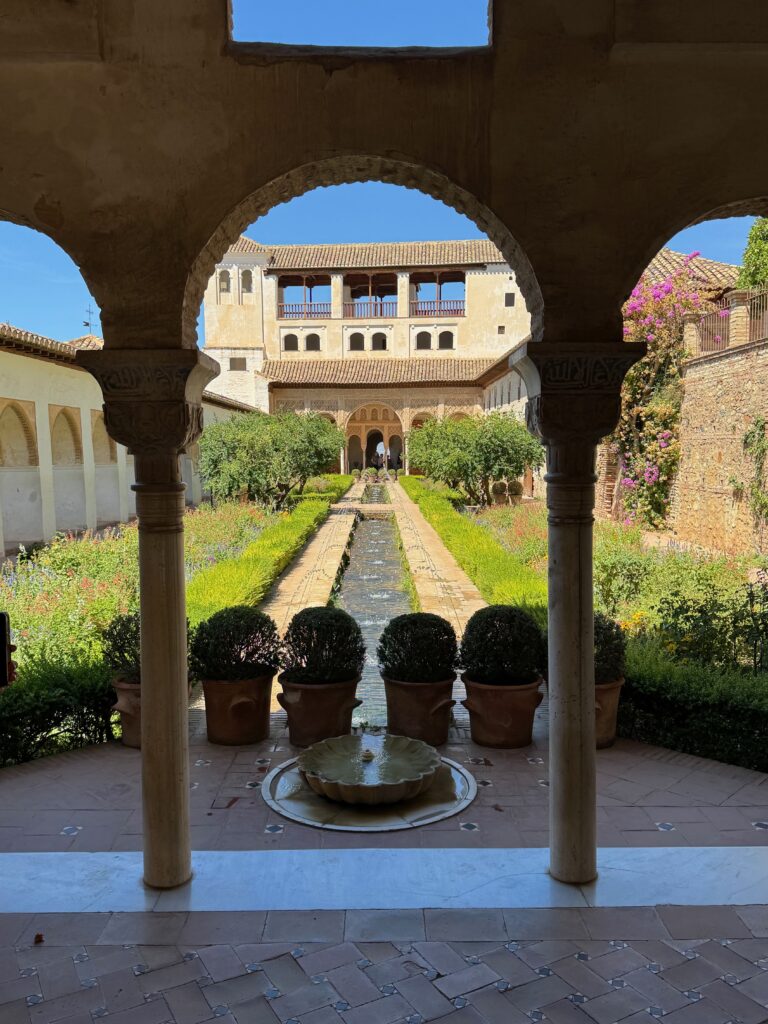
The gardens were stunning. Wide open vistas overlooking the palaces on the other side. Smaller, more intimate spaces encircled by hedges framing fountains and cascades of glorious colour. It was utter heaven.
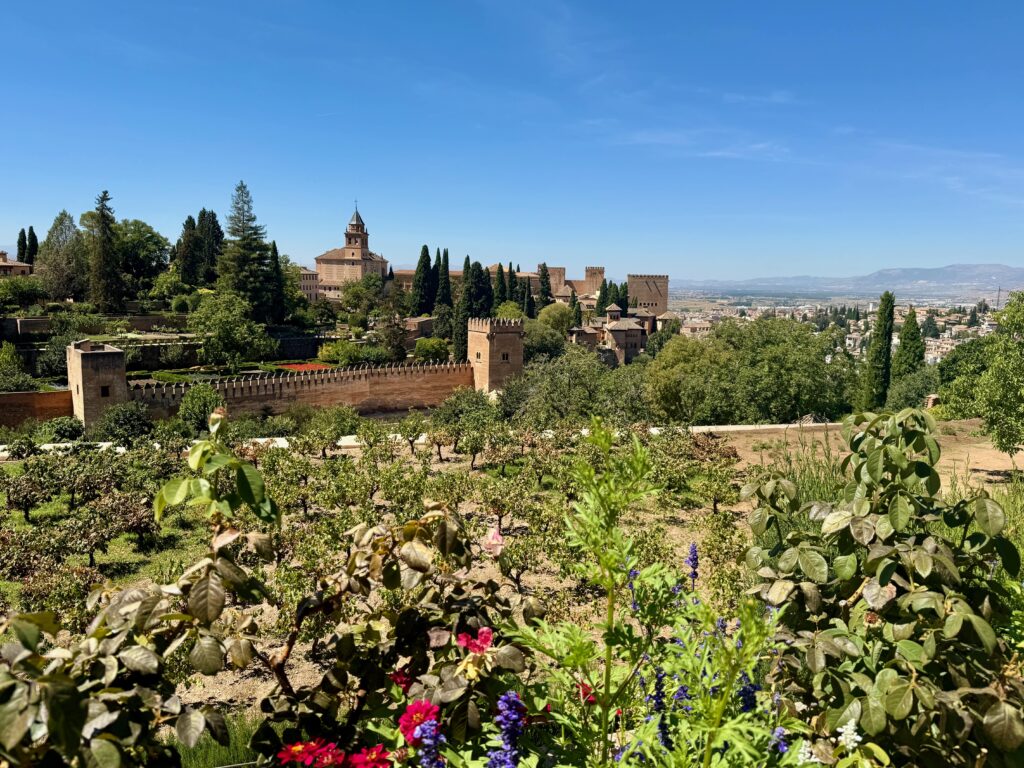
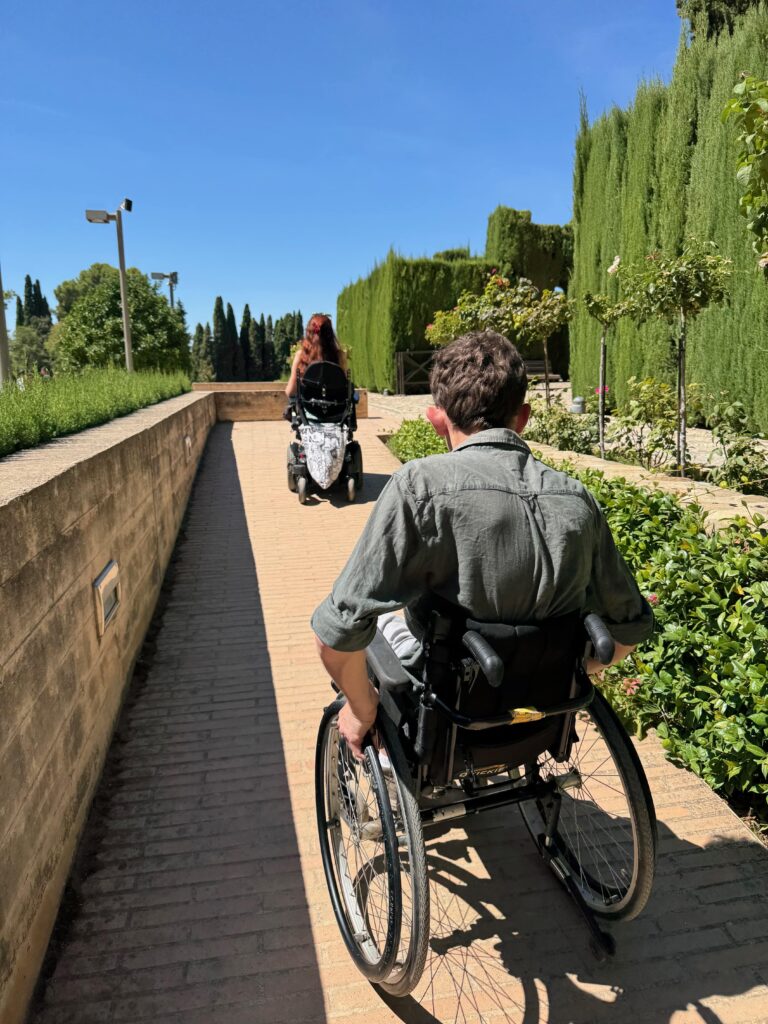
Staff advised us that the palace itself would be inaccessible due to uneven ground to get there. However, we decided to give it a go and found nothing more challenging than a slight incline and a gently cobbled street. I am aware this may be too difficult for some. But don’t be deterred. Have a look for yourself.
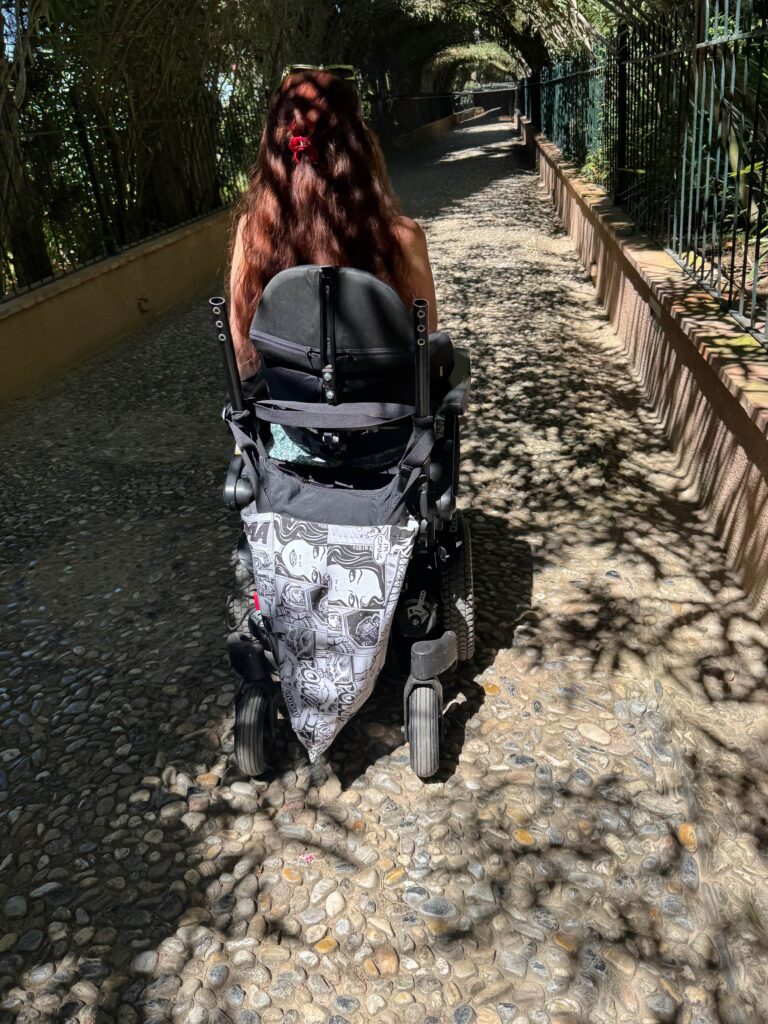
For our reward was another glorious palace although we could only enter into the main entrance.
Time to go home…
Finally, after several hours immersed in utter beauty we decided to call it a day. Going down the hill the hill proved far easier than going up and we didn’t need a taxi!
Disclaimer:
I have a strong dislike of hyperbole and tend to avoid using it all costs. However, I can say, in all honesty, that in the instance of the Alhambra, the descriptions I have given only go some way towards accurately representing such a glorious place. I feel very fortunate to have had the opportunity of visiting it.
Points to consider when visiting the Alhambra Palace:
There are many companies offering very expensive tours of the Alhambra, costing anything up to £100. You will likely be part of a sizeable group and will be taken round on a tour listing anything between two and three hours. We contacted a few and in all cases, no provision was made for disabled travellers.
For a more affordable option and to purchase the tickets without accompanying tour go to https://tickets.alhambra-patronato.es/en
Carers get in for free.
The Alhambra is open every day although opening hours vary throughout the year. For the most up to date information visit https://tickets.alhambra-patronato.es/en/producto/alhambra-general/
Related Posts
-
Visiting Japan with Motability Lifestyle
March 27, 2026 -

The North-East Tourism Conference, Aberdeen
January 2, 2025 -

Revisiting Sweden’s High Coast for Lifestyle magazine
November 30, 2024 -
Vilnius – accessibility in the green capital of Lithuania
October 9, 2024 -

The alternative Italian break – authentic and accessible
September 3, 2024